When I first discovered that my 3rd great-grandmother, Catherine Cunneen (1855-1882) was born in Guernsey, Channel Islands, I had no clue on where that was, so I started a ton of research trying to get a picture on what the life of the Cunneen family would have been like from the time period before they emigrated to New Zealand in 1874. What types of people were they? What even is the Channel Islands? Therefore, if you have stumbled across this post because you too have ancestral ties to Guernsey, Channel Islands; then I assure you this blog post will explain a lot of things to you. This is a compilation on my research & knowledge of life on the Channel Islands, and an overview on the high emigration rates from the Island at around 1870, with reference in parts to my own ancestors story.
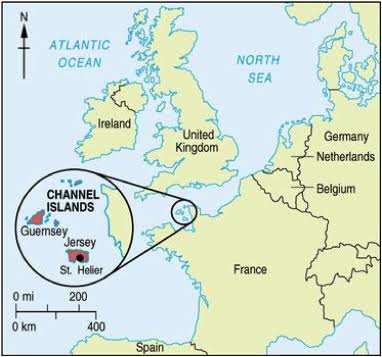
History of Guernsey, Channel Islands
Guernsey has had a long and eventful history. It is a densely populated island lying 27 miles off the Normandy coast. In 1814, it remained largely French-speaking, though it had been politically British for over 600 years. Many islanders were Anglican or RC (Roman Catholic) and fluent in French and English. A remarkable number of people from the Channel Islands came to New Zealand especially in the 1870s. The Channel Islands include two larger Crown dependencies; the Bailiwick of Jersey (which is the largest of the Islands), and the Bailiwick of Guernsey. The Islands have remained a possession of the Crown, but have never become part of the United Kingdom or any part of England or Great Britain. While treated as a Crown dependency, the laws of the Channel Islands are their own and the Island is not subject to British legislation. Consequently, while the UK was part of the European Union, the Channel Islands chose not to join and remain unaffected by Brexit today.
The Islands were invaded many times by the French, the Spaniards and, in the twentieth century, by the Germans. The Channel Islands are self-governing and many of their laws are Norman French in origin. Until the middle of the twentieth century, French was the official language and many surnames and place names are also French in origin. Islanders spoke their own languages – Jèrriais, Dgèrnésiais (or Guernésiais), Auriginais and Sercquiais – but the written records were kept in French.
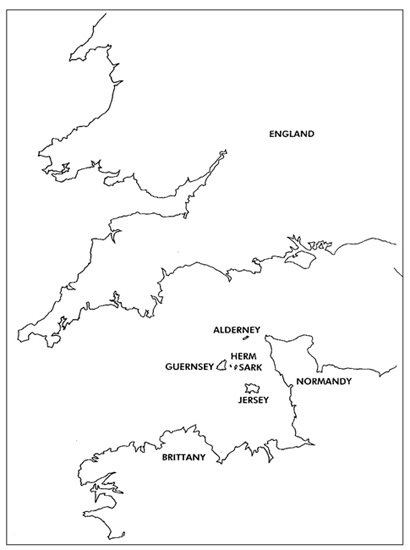
Inevitably in such small islands intermarriage between cousins was common and the small number of surnames can make for very confusing family trees. There were, however, sufficiently large populations in most of the islands and migration helped to widen the gene pool. Immigrants have come from all over the world, but particularly from England and France. Many immigrants stayed a few years in one island and then moved to another, so research in several of the islands may be necessary.
The Calvinist ministers who came to the islands from the sixteenth century onwards narrowly limited the Christian names that could be chosen. It is only by using a wide variety of sources that such identifications can be verified properly.
Why did they emigrate from the Channel Islands? Why did they choose to embark for New Zealand?
It is now necessary to explore why New Zealand was the chosen destination for so many. New Zealand is a very young country. The first English missionaries landed in 1814. The New Zealand Company was formed, and the first British settlers arrived, in 1826. By 1840 there were fewer than 1,000 European settlers compared with over 100,000 Māori. In 1840 the British Government claimed sovereignty and reached a settlement with the Māori chiefs through the Treaty of Waitangi. The dominant politician between 1869 and 1887 was Julius Vogel, in 1869 Vogel became Treasurer – and he adopted a bold expansionist policy, bringing in thousands of immigrants through free and subsidised passages and extensive marketing. In late 1873 free passage was introduced for those who met the requirements, and people already in New Zealand were allowed to nominate friends and relatives for free passage.
We know that many Channel Islands men and women left the Island to start new lives in countries such as Australia, Canada, New Zealand and America within the time period of 1850-1875. Many choosing Australia for their destination as prompted by the gold rush and discovery of gold. However, in this blog post I want to centre in on the destination of New Zealand, where my 3rd great-grandmother’s family would choose to settle after a life in Guernsey.
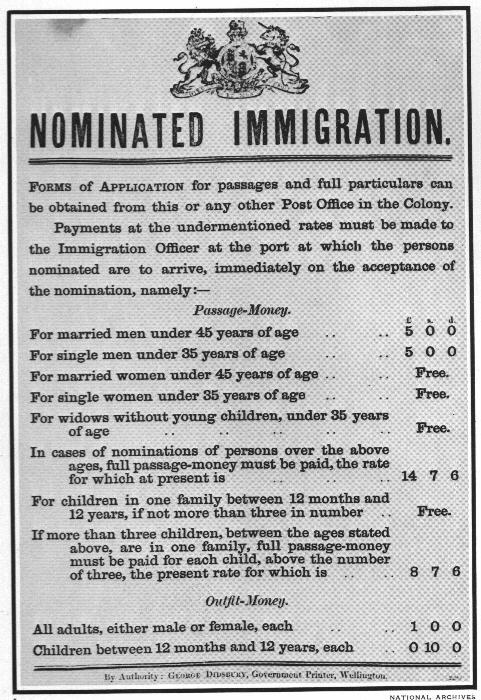
The economic downturn on the Island also led islanders to take up opportunities for land ownership and a new life in New Zealand. In the 1870s and 1880s islanders were given free passage to New Zealand, perhaps this would explain why Catherine Cunneen and her husband John Ryan (my ancestors) initially moved there in 1873. Guernsey emigration to New Zealand wasn’t as common as it were from Jersey, but still significant. Catherine’s mother, Mary, and siblings would follow the year later. It was estimated that figures of emigration from the Channel Islands to New Zealand & Australia are as follows by year –
- 1839-50… 15
- 1851-60… 160
- 1861-70… 15
- 1871-75… 719
As you can see the majority of emigrants from Channel Islands to Australia & New Zealand occurred in the 1870’s. The 1872-75 migration can be explained by adverse economic conditions in the Channel Islands, seemingly attractive conditions in New Zealand and the difficult journey to New Zealand being compensated by heavy subsidisation.
The Channel Islands enjoyed a massive economic boom in the first half of the 19th century, however the boom ended abruptly in the 1850s; the primary reason was the collapse of world trade and the cod fishing industry. But other factors too played a part, like – output in the oyster industry fell 95% as a result of over-fishing and health scares, the shipbuilding industry could not make the change from sails and wooden hulls to steam and iron, the cider industry declined by 90%, and many major construction projects were abandoned around this time. In very round terms it is possible that in 1881 one third of Channel Islands-born people no longer lived in the Island,
Channel Islands emigrants had a long and often tortuous journey to New Zealand. It began with a sea crossing probably between Jersey and Guernsey at Southampton, then train journey up to London, and probably a few days in London before embarking on the trip to New Zealand.
Voyage aboard the ship ‘Berar’ (1874-1875)
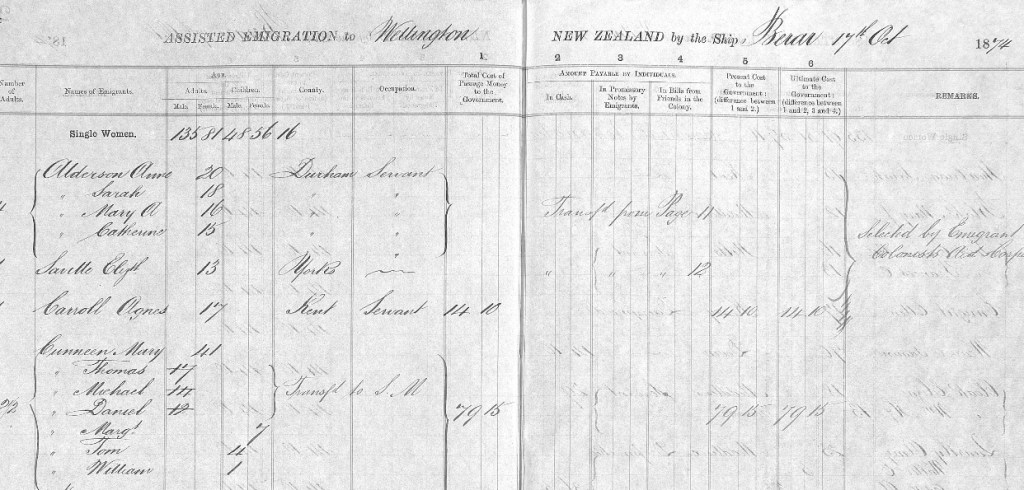
Catherine’s mother, Mary and her other children on the 18th of October 1874, would embark on the ship Berar, sailed by Captain Heiho, aboard 362 other assisted immigrants; which left London for New Zealand, arriving at Wellington 96 days later, on 22 January 1875. This trip was marred by 21 deaths during the early part of the voyage due to an outbreak of scarlet fever. A Royal Commission of Enquiry was convened into this outbreak of disease and the consequent deaths.
Thanks to a post I found written by Suzanne Perrin, I was able to get a view on what Mary Cunneen (née Ryan) and her children’s voyage to New Zealand would have been like. In her post, Suzanne speaks of her own family’s emigration story aboard the Berar ship. This could be useful to you also if trying to imagine your ancestors voyage story from another vessel.
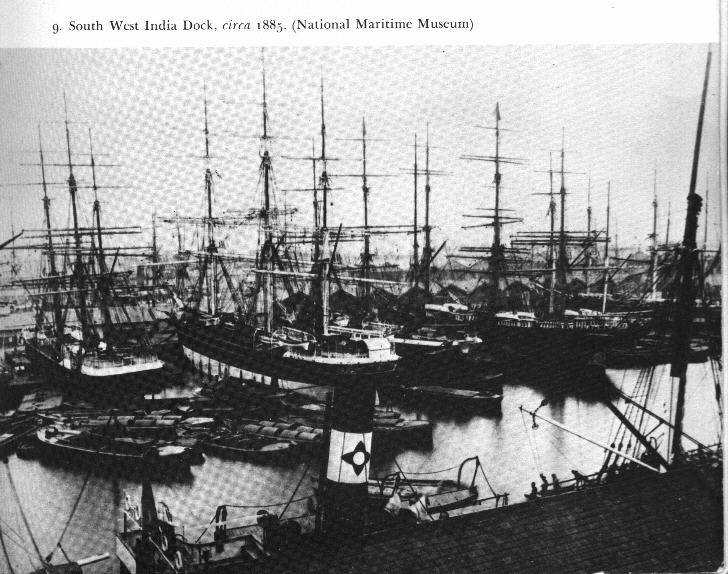
They embarked on the 15th October 1874 from the South-west dock of the East India Docks of London. ‘A quotation from Walter Savill of Shaw Savill & Co gives a first hand impression of the conditions there in those days – The traveller was faced with a scene of pandemonium and filth. There was a forrest of masts and bowsprits of ships berthed bow-to on the quay. Noise of porters, milling crowds, baggage cargo, dock workers, crew, horses and carts.’
The Berar had a full complement of 362 passengers:- 135 male, 100 female, 53 boys, 58 girls, 16 infants. Their nationalities were 324 English, 5 Scotch, 25 Irish, 6 French, 1 German, 1 Indian. Suzanne’s family member kept a diary, a full and lively description of their voyage until 20 December 1874, by which time his black notebook (with an Almanac for 1874 in the front) was full of his pencilled account. For the final 5 weeks of their trip which was not recorded in the diary, between 20 December 1874 and their arrival in Wellington on 22 January 1875, they sailed through the “Roaring Forties” in cold, wet and rough conditions with no sight of land. The hatches were battened down and the passengers were only allowed on deck under strict supervision.
The Wellington newspaper for 23 January 1875 recorded The ship Berar from London with immigrants arrived last night; 89 days out on passage. There have been 21 deaths from scarlet fever on the voyage. Still 20 cases under medical treatment. The fever made its appearance the day after leaving London. Ship has been placed in quarantine; probably be detained a fortnight. By early February the immigrants had been dispersed to various provinces.
The Wanganui Chronicle of 9 February 1875 reported the settlement as follows: – 32 Berar immigrants for Foxton and 41 for Wanganui.
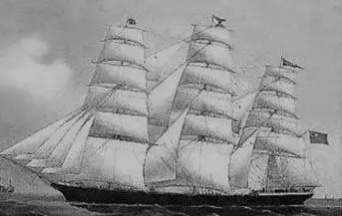
While in quarantine for the outbreak, Mary and her children would of heard of the shocking fate of the ship Cospatrick on which they had nearly sailed. It caught fire on 18 November 1874 and sank at latitude 37oS, latitude 12oE. There were only 3 survivors, making this one of the greatest maritime disasters, with 470 lives lost.
The Lord Mayor of London opened a fund for dependent relatives, and the New Zealand Government contributed £1,000, taking the total to £2,575 for the “Cospatrick Relief Fund“, and the papers of the time were full of the news, and new safety measures were advocated for fire at sea. The impact that the disaster had on the populace can be judged by the fact that the news was widely known even through rural England. ‘Monday, Childermas Day (28 December 1874) – To-day we heard by short telegram of the awful calamity of the burning of the emigrant ship Caspatria (sic) near the Cape of Good Hope bound for New Zealand. Four hundred and forty persons burnt in her (actually 429). One boat reached St Helena with three survivors who had lived on the flesh of their companions.’
On the ship Berar, it was found that: immigrants as a body were a good class of people and many have already found employment. The submissions by Dr. P N Newell (surgeon to Berar) were that: – the ship needed a bathroom; there were too many passengers on board – especially young children; more ventilation was required between decks; food generally was good – only onions poor quality that would have been injurious to health; order and discipline was very good amongst passengers; there were some dirty people on board – refusing to keep selves and place clean; spread of disease alarming – and that ‘Alice Cogger’ brought the scarlet fever disease on board.
This would be the last voyage for the ship Berar; the vessel only made three voyages to New Zealand from England, the first in 1865, second in 1873, and the final one we speak of here – in 1874.
When packing to come to the colony, early settlers had to be very careful to make sure they had everything, for there was no corner store to visit to stock up on things forgotten. Consequently, luggage was plentiful, everything including the kitchen sink. The more affluent even brought entire kit set buildings. To send home for a parcel of necessities involved a wait of many months.
Dietary scale for each passenger, each week…
To get some insight into the food these immigrants would have eaten I have found the following. Enough provisions for 22 weeks were put aboard, together with medical supplies etc. Depending on whether you were in the ‘2nd cabin’ or ‘steerage’ your portions for each of the articles differed. On board, the articles served to the passengers and total portions divided each week were:
- Preserved meats – 3pounds
- Soup & bouilli – half pound
- York ham – half pound
- Fish – quarter pound
- Prime India beef – 2pounds & 1/4
- Irish Mess pork – 2pounds & 1/2
- Biscuit – 8pounds
- Flour – 7pounds & 1/4
- Rice – 1pound & 1/2
- Barley – half pound
- Peas – 1pint
- Oatmeal – 1pint & 1/2
- Sugar, raw – 2pounds
- Lime juice – 12 ounces
- Tea – 3 ounces
- Coffee – 5 ounces
- Butter – 6 ounces
- Cheese – quarter pound
- Currants – quarter pound
- Raisins, Valencia – 1pound
- Suet – 12 ounces
- Pickles – 1/2 pint
- Mustard – 1 ounce
- Pepper – 1/2 ounce
- Salt – 4 ounces
- Potatoes fresh – 5pounds & 1/2
- Potatoes preserved – 1pound
Assisted immigrants were expected to contribute £5 per adult towards the cost of passage to New Zealand. Anyone over 12 years of age was considered an adult; a child between one and twelve was half an adult; infants under one year were free. If unable to pay the fare, they were to sign promissory notes for £5 each, according to this promise, repayment was to be in quarterly instalments beginning three months after landing.
Arrival in New Zealand
When the immigrant ships arrived in New Zealand, the immigrants were taken to a holding place. Local businesses that wanted labour would visit these places and seek to recruit, while the immigrants themselves actively sought employment and housing.
Some sought employment where they landed, while others quickly moved to areas where the opportunities were considered to be greater.
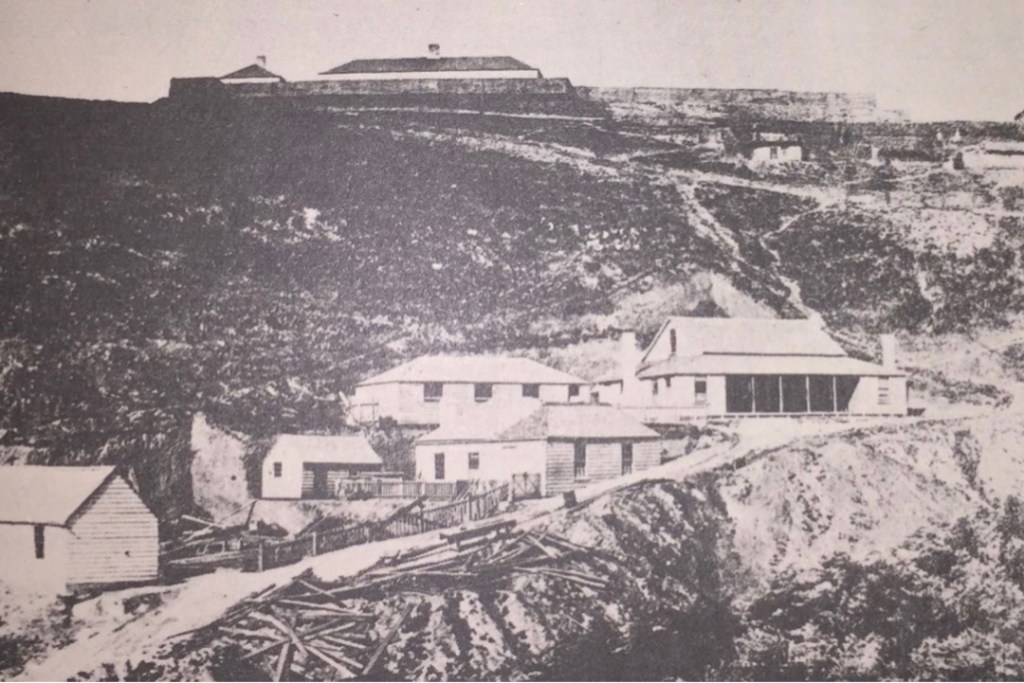
Immigrants, by their very nature, tend to be industrious and entrepreneurial. This is certainly true of Channel Island emigrants to America and Canada, where a number achieved prominence in their communities and nationally. However not much prominence can be seen for the emigrants that settled in New Zealand from the Channel Islands. Typically because they were working class labourers and domestic servants who did little more than sign up to a free passage in the hope of a better life.
Some typical costs in the 1800’s
Prices that immigrants would have expected to pay upon arrival for various things in New Zealand are:
- Cob Houses: a nice little cottage could be built for about £125
- Farmhouse: a moderate farmhouse could be built for around £50 with mortice & tenon studs, no nails. Chimney bricks bonded with lime and mortar mix. Timber milled on site.
- Postage: from 1840, it was 2d per letter and 1d per newspaper. It went by boat when the weather allowed otherwise overland.
- Guns: £1-10s
- Private Schools: from 1863, board £30 per year for tuition and £15 to study bible, ancient and modern language, history, geography, arithmetic and mathematics.
- Fines: for firing a gun on the beach was £5
- Jetty: at Kaiwarra was built in 1885 for £214
- Newspaper: annual subscription £1-10s in advance
- Salaries & wages: labouring men £1-10s per week, maid £10 to £12 per annum, town surveyors £50 per annum, police clerk £91-5s
- Food: bread 8d for 2lb’s, butter 2/6d, cheese 2/6d, beef & mutton 9d, ham 1/6d, tea 5d
- Soap: 7d
 Beth’s Ancestry | Family History Research